
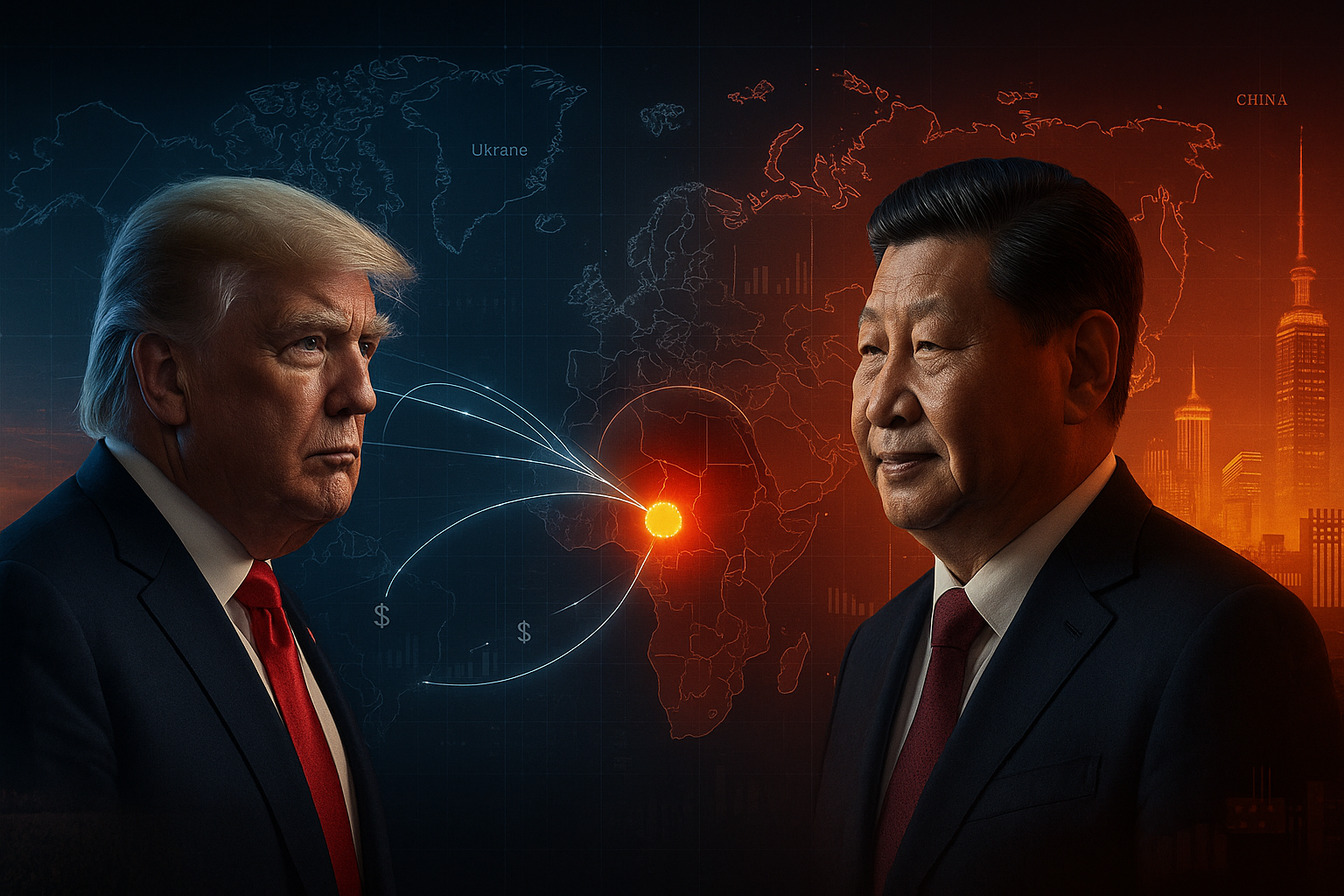
President Donald Trump and Chinese President Xi Jinping spoke by phone Monday morning in a strategically timed call that signaled fragile but widening cooperation on trade, while leaving deeper geopolitical tensions over Taiwan and Ukraine simmering beneath diplomatic pleasantries.
Trump announced April in-person meetings in Beijing and extended an invitation for Xi to visit Washington for a state visit later in 2026, projecting unity despite structural frictions.
The two leaders discussed tariffs (with Trump highlighting agricultural wins for US farmers), fentanyl supply chains, and Ukraine peace negotiations.
Yet Xi doubled down on Taiwan’s “return to China” as a crucial element of a post-war international order.
Markets interpreted the call as trade-war de-escalation, though skeptics worry Beijing may reverse commitments if geopolitical calculus shifts.
Trade thaw masks deeper strategic competition
Monday’s call reinforced the fragile tariff ceasefire brokered at October’s Busan summit.
There, Trump agreed to freeze tariff escalation on Chinese goods in exchange for Beijing lifting retaliatory duties on US agricultural products and cracking down on fentanyl precursor chemicals.
Trump posted to Truth Social that the pair had “reached a significant and beneficial agreement for our outstanding farmers.”
He specifically highlighted soybeans, the leading US agricultural export to China and a political prize for Trump’s Midwest base.
China had boycotted American soybeans since May, dealing a real economic blow to farm country.
The resumed purchases signal modest economic relief, though traders remain cautious: soybean futures actually fell after Busan because details remained vague.
On fentanyl, the US cut its 20% tariff down to 10% in exchange for Beijing’s promise to stop shipping precursor chemicals to North America.
Fentanyl remains central to America’s overdose crisis, linked to tens of thousands of deaths annually.
Trump framed it as a victory; China characterized it as reciprocal cooperation. The overall effective tariff rate on Chinese goods dropped from 57% to 47%, down but still historically elevated by pre-2020 standards.
The real test comes next: whether China follows through on promised rare-earth supply liberalization and whether either side preserves the truce through the 2026 US elections or reverts to escalation when political incentives shift.
Taiwan & Ukraine: Competing visions of ‘order’
Here’s where the call got tense. Xi seized the conversation to reaffirm China’s non-negotiable position: Taiwan’s “reunification with China is an integral part of the post-war international order.”
That language is significant. It contradicts Trump’s earlier claims that Taiwan wasn’t seriously discussed at Busan.
It also came at an explosive moment: Japan’s Prime Minister Sanae Takaichi had warned weeks prior that any Chinese military move against Taiwan would trigger a Japanese military response. Beijing clearly fears a US-Japan-Taiwan coordination bloc.
The timing reveals China’s anxiety. By putting Taiwan firmly on the agenda and reiterating sovereignty claims, Xi signaled red-line firmness while trying to appear reasonable on other fronts.
It’s a classic diplomatic move: give ground on trade, hold firm on sovereignty.
On Ukraine, Xi reiterated Beijing’s support for “peace” but avoided explicit commitment to pressure Russia, a telling omission given China’s industrial support for Moscow and its stake in Russian energy imports.
Trump, eager for Ukraine negotiations before Thanksgiving, appeared to accept Xi’s posture of strategic ambiguity. It’s a tightrope that satisfies no one but delays confrontation.
The April Beijing visit and the 2026 state visit signal both leaders want continuity and high-level engagement.
Yet the underlying tensions, Taiwan’s sovereignty, competing economic interests, and Ukraine’s trajectory remain unresolved. Markets will watch whether the diplomatic warmth holds or cracks under pressure.
The post Trump & Xi hold phone call: what their talk means for trade, Taiwan & Ukraine war appeared first on Invezz