
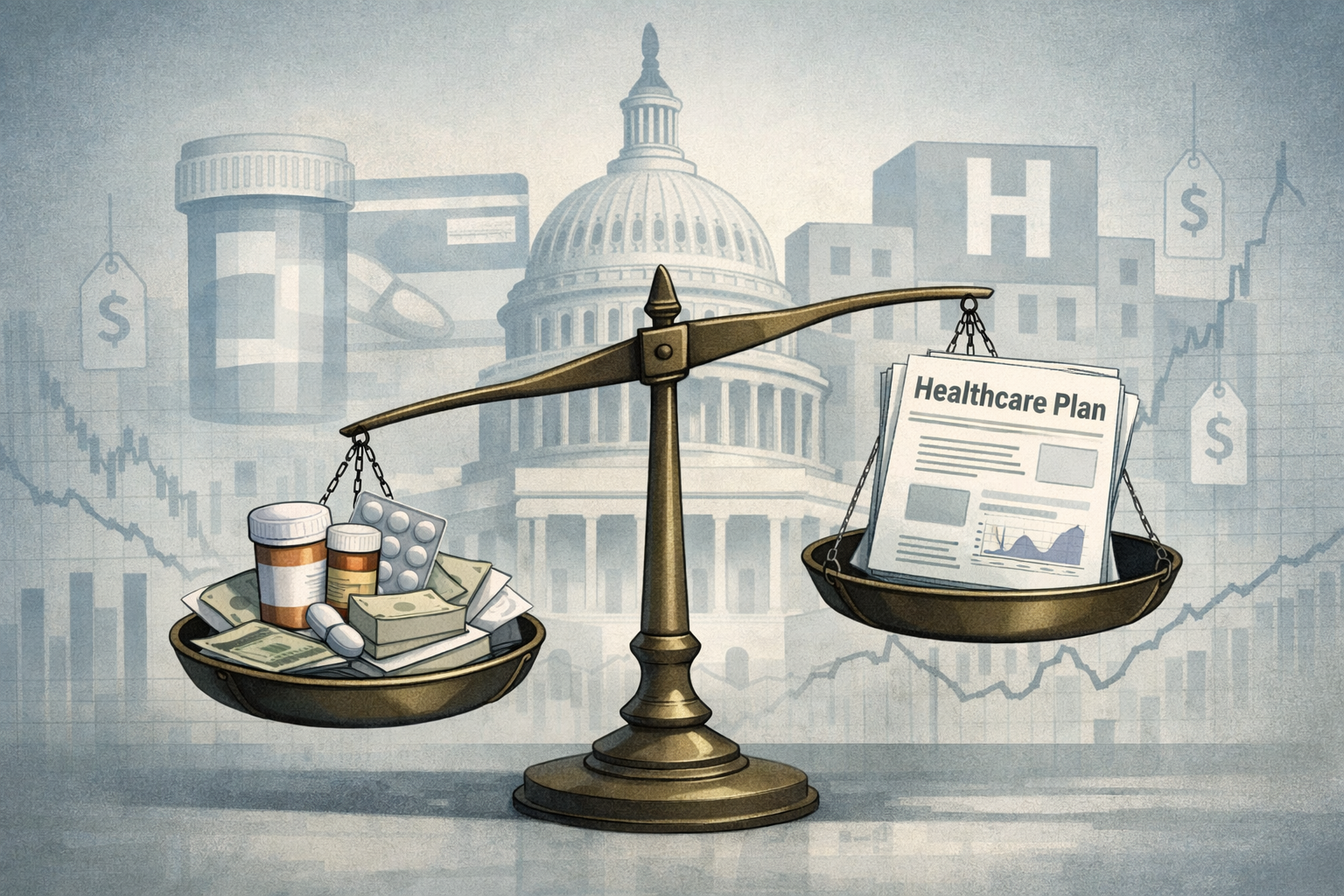
The Trump administration on Thursday unveiled what it called the “Great Healthcare Plan,” a broad framework aimed at addressing healthcare affordability, drug prices, and insurance transparency.
While the White House described the plan as a decisive step toward reform, analysts and healthcare policy experts largely characterized it as lacking detail, politically constrained, and unlikely to deliver meaningful near-term relief.
The framework arrives amid heightened concern over rising healthcare costs, particularly as enhanced Affordable Care Act (ACA) subsidies expired last year, driving up premiums and deductibles for millions of Americans.
Thursday was also the final day of open enrollment for Obamacare plans, underscoring the timing and political sensitivity of the announcement.
A broad framework with limited specifics
According to the White House, the Great Healthcare Plan rests on four pillars: drug price reforms, health insurance reforms, price transparency for healthcare costs, and fraud protections and safeguards.
Elements highlighted by the administration include funding for health savings accounts, transparency requirements for insurers and providers to publicly post prices, and a call for Congress to codify pricing deals President Trump has made with pharmaceutical companies.
Dr. Mehmet Oz, Trump’s administrator for the Centers for Medicare and Medicaid Services, said during a call with the reporters that “Instead just papering over the problems, we have gotten into this ‘Great Healthcare Plan’ a framework that we believe will help Congress create legislation that will address the challenges”.
President Trump echoed that urgency in the call accompanying the plan’s release, saying he is “calling on Congress to pass this framework into law without delay,” adding that lawmakers “have to do it right now so that we can get immediate relief to the American people.”
However, when pressed for policy specifics, administration officials described the proposal as a “broad framework,” offering few details on implementation or legislative pathways.
Analysts see familiar ideas and political hurdles
Market analysts and policy experts were notably skeptical.
Spencer Perlman, director of healthcare research at Veda Partners, said in a MarketWatch report that the plan appears designed to signal action rather than deliver results.
“We think it is intended to demonstrate that the White House is doing ‘something’ about affordability and healthcare prices, but we believe the policies either stand little chance of being enacted by the current Congress or will have a minimal impact if enacted,” he wrote in a note.
Others echoed that view.
“Their ideas are nothing new, nothing unexpected, pretty challenging to implement,” said Kim Monk, a healthcare policy analyst at Capital Alpha Partners.
“I’m not seeing anything earth-changing.” Raymond James analyst Chris Meekins described the proposal as “a retread of previously advocated-for positions,” adding that “there is no legislative path forward for much of it, in our view.”
Healthcare policy researchers also warned that the plan does not address the most immediate pressure point: rising ACA premiums.
Cynthia Cox, a senior vice president at KFF, said in an npr report that the framework “looks much more like a compilation of Republican ideas” and “doesn’t appear to address the rising premium payments that we’re seeing.”
ACA implications
The plan’s silence on extending ACA enhanced subsidies has amplified concerns that millions could face higher costs or lose coverage altogether.
Edwin Park, a research professor at Georgetown University’s McCourt School of Public Policy, said in a Guardian report that the framework “clearly opposes extension of the expiring ACA marketplace subsidies,” warning that “roughly 4 million people will end up uninsured and many millions more will see their marketplace premiums double or increase by even more.”
Bipartisan talks in the Senate to revive the subsidies are continuing, with some lawmakers expressing cautious optimism.
Still, experts warn that without concrete legislative action, the Great Healthcare Plan may struggle to move beyond rhetoric.
The post Why analysts are not impressed with Trump’s ‘Great Healthcare Plan’ appeared first on Invezz