
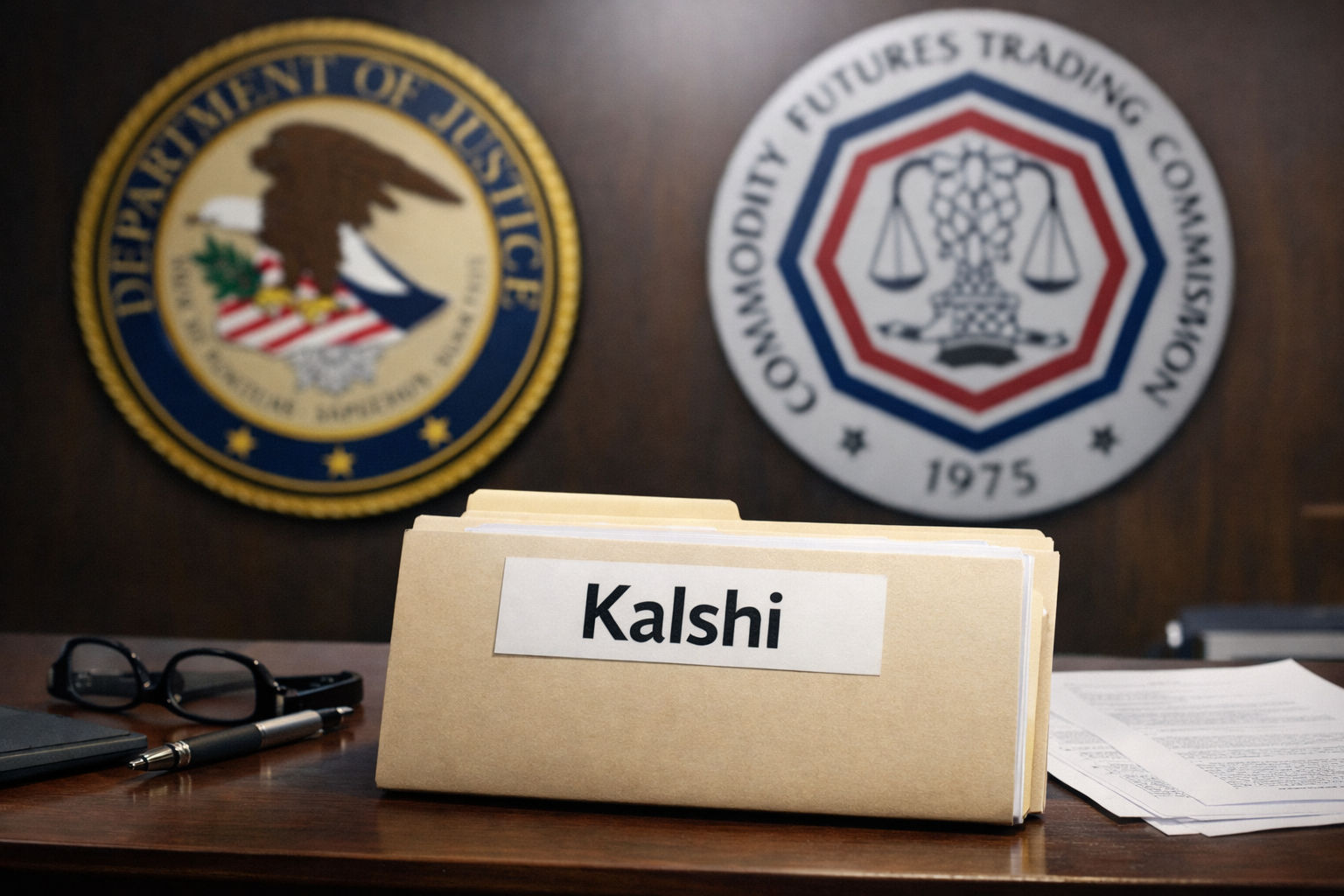
The US Department of Justice and the Commodity Futures Trading Commission have asked a federal court to stop Arizona from enforcing its gambling laws against Kalshi’s event contracts.
The filing argues that these contracts fall under federal derivatives law, not state betting rules. Regulators say the products qualify as “swaps” under the Commodity Exchange Act and therefore come under the CFTC’s exclusive authority.
Arizona’s case against Kalshi has been building for months. The state first issued a cease-and-desist letter in May 2025, accusing KalshiEx LLC and Kalshi Trading LLC of accepting illegal wagers.
Authorities later filed criminal charges under state betting laws, with an arraignment set for April 13.
Attorney General Kris Mayes said the firms were running an “illegal gambling business in Arizona without a license” and offering unlawful election wagering.
Kalshi has rejected the claims. CEO Tarek Mansour said the charges were a “total overstep” and “not about gambling.”
Federal agencies say Arizona’s actions interfere with federal law. They argue that allowing states to regulate these contracts would create “a patchwork of 50 state regulations,” which goes against Congress’s goal of maintaining uniform and secure trading markets.
The DOJ and CFTC have asked the court to issue a temporary restraining order and a preliminary injunction, adding that failing to act would cause “sovereign injury” by weakening federal authority.
Regulatory pressure on Prediction markets is growing
The case is part of a broader legal fight over prediction markets in the United States. The CFTC has already filed lawsuits against regulators in Illinois, Connecticut, and Arizona, arguing that it has exclusive control over federally registered trading platforms that list event contracts.
Courts have started to issue mixed rulings. A federal appeals court in New Jersey recently ruled that Kalshi’s sports-related contracts are allowed under federal law unless the CFTC steps in.
In contrast, a Nevada state judge said that buying a contract on a baseball game is no different from placing a traditional bet, allowing enforcement to continue.
Courts in Ohio and Maryland have also ruled against Kalshi, while a Tennessee federal judge sided with the platform earlier this year.
A ruling in favor of the CFTC would allow these platforms to operate under a single federal framework. On the other hand, a ruling in favor of states could force them into existing gambling systems or limit their access in several regions.
Pressure on the sector has been rising as activity grows. Monthly trading volumes across prediction platforms have climbed past $20 billion, up from $1.2 billion earlier in 2025, according to TRM Labs. Increased activity has also raised concerns about insider trading.
In one case, six Polymarket traders reportedly made $1 million by correctly predicting the timing of US military action against Iran.
The post DOJ and CFTC move to block Arizona case against Kalshi appeared first on Invezz