
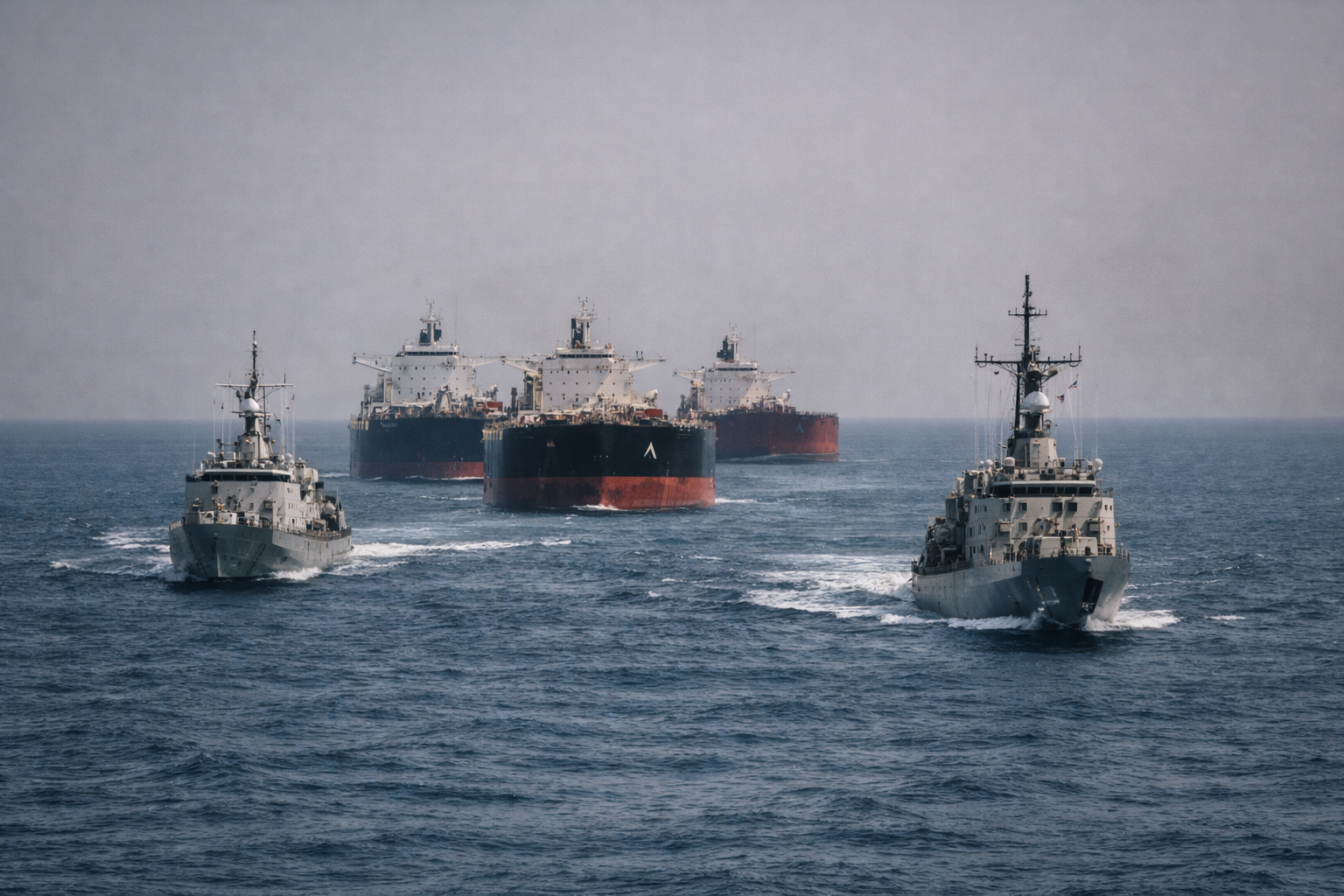
The global oil market is teetering on the edge, with the US-Iran conflict and the subsequent blockade of the Strait of Hormuz plunging supply into a crisis that has sent prices soaring past $100 a barrel.
While fresh talks between Washington and Tehran offer a glimmer of hope, the physical market’s alarmingly high price premiums—with immediate delivery of Brent crude trading $30 above the futures price and some North Sea grades hitting a record-shattering $150—signal a deeply entrenched supply crunch.
Experts said oil prices could still rise sharply above the three-figure mark if the Strait of Hormuz remained shut.
Oil prices dropped on Tuesday, with a potential return to talks to resolve the conflict between the US and Israel easing concerns about supply disruption caused by the Strait of Hormuz blockade on Iran.
The previous session saw both benchmarks increase, with Brent rising over 4% and West Texas Intermediate close to 3%. This increase followed the start of a US military blockade of Iranian ports on Monday.
According to Tamas Varga, an analyst at PVM Oil Associates, the downward pressure on prices due to the potential resumption of US-Iran talks overlooks the actual reduction in the physical supply of oil barrels that are currently static.
No resumption in sights
“Resuming flows through the Strait of Hormuz remains the single most important variable in easing the pressure on energy supplies, prices and the global economy,” the International Energy Agency said on Tuesday.
Shipments through the Strait continued to be severely restricted in early April, with the average daily loading of crude, natural gas liquids, and refined products at approximately 3.8 million barrels per day, the IEA said in its monthly report on Tuesday.
This is a stark contrast to the volume of over 20 million barrels per day that was being shipped in February, before the crisis.
“With oil-importing nations scrambling to source replacement barrels from an increasingly shrinking pool of supply, physical crude oil prices surged to record levels near $150/bbl, far above the prices in futures markets, with the physical-futures disconnect becoming increasingly acute,” IEA said.
US-Iran peace talks failed over the weekend, and consequently, President Donald Trump ordered a maritime blockade against Iran, effective Monday afternoon, to stop oil and cargo ship traffic to and from Iranian ports.
Despite this, during the weekend, a total of six oil tankers navigated the Strait of Hormuz. Specifically, three loaded supertankers exited the Persian Gulf heading east, while three other oil tankers entered the Gulf for loading.
“However, Iran is unlikely to allow ships to pass through the strait whilst its own vessels are being blocked by the US military,” Carsten Fritsch, commodity analyst at Commerzbank AG, said in a report.
Hopes of a resumption of regular shipping traffic have thus been dashed, at least for the time being.
The potential for renewed military escalation exists if the US prevents ships from entering or leaving Iran and Iran responds by opening fire. In such a scenario, Trump had previously threatened to destroy Iranian vessels approaching the US blockade.
Further tightening
The supply situation is expected to tighten because Iranian oil shipments are no longer reaching the market due to the ongoing maritime blockade.
Iran’s oil exports reached 1.84 million barrels per day in March and have been 1.71 million barrels per day in April so far, according to data from oil tanker tracking specialist Kpler.
China remains the primary purchaser. Notably, reports surfaced late last week indicating that independent Chinese refineries were, for the first time in several years, preparing to pay a premium above Brent crude prices for Iranian oil.
Additionally, India is poised to receive an oil shipment from Iran, the first in seven years. This comes after the US temporarily eased sanctions on Iranian oil stored in tankers to address the supply shortfall in the oil market.
However, it remains uncertain if this relaxation of sanctions will persist following the maritime blockade.
Oil price reaction
The announcement of the blockade prompted a corresponding reaction in the oil market.
The increase in gasoil prices was especially noticeable, accompanied by a widening of the crack spread between gasoil and Brent.
Furthermore, price differentials across various contract maturities on the forward curves—known as time spreads—also point to market tightness.
On Monday, the spreads experienced significant widening, though they have not yet reached the levels observed immediately preceding the ceasefire.
The spot market for physical crude oil is seeing an even greater price premium.
Dated Brent, for instance, was priced at $132.5 per barrel on Monday, a figure approximately $30 higher than the front-month Brent contract, according to Bloomberg data.
The price for immediate physical delivery of the North Sea Forties grade hit a record high of almost $150 at the beginning of the week, according to data from LSEG.
Official selling prices
Tight supply is also evidenced by soaring Gulf region official selling prices (OSPs). Saudi Arabia drastically increased its May OSPs for Asian buyers.
Arab Light’s premium over the Oman/Dubai benchmark ($106.6 Monday) hit a record-high of nearly $20 per barrel, up significantly from April’s $2.5 premium. Iraq quickly followed, raising its May OSPs for Asia by $17 per barrel.
Kuwait, on Monday, demanded a premium of $17 per barrel over the Oman/Dubai benchmark for its primary crude grade destined for Asia.
However, the closure of the Strait of Hormuz has severely limited the ability of both Iraqi and Kuwaiti oil exports to reach the market, largely paralysing their shipments, according to Commerzbank.
Consequently, this premium’s significance is currently minimal. In contrast, Saudi Arabia retains the option to reroute its oil via the East-West Pipeline for export from the Red Sea.
Oil prices dipped below $100 per barrel on Tuesday.
This decline is attributed to the prospect of imminent talks between the US and Iran, although the outcome of these negotiations and the potential for conflict resolution remain unclear.
“The significantly higher oil prices for immediate delivery indicate that there is a risk of further price rises should the Strait of Hormuz remain closed,” Commerzbank’s Fritsch noted.
The post Tight supply, $30 premium for Brent delivery hint at further spike in crude appeared first on Invezz